
A group of cannabis interests challenging the federal marijuana ban are urging the U.S. Supreme Court to reconsider a 20-year-old precedent on cannabis policy.
In a petition for a writ of certiorari filed Friday, a coalition of state-regulated marijuana business entities said that the premises undergirding the high court’s 2005 ruling in Gonzales v. Raich had changed so much that the decision was due for another look.
The petitioners, represented by litigator David Boies, said Raich was an “aberration in the Court’s Commerce Clause and Necessary and Proper Clause precedents and a drastic departure from the federalism principles those clauses embody.”
That 2005 decision, which grew out of California’s early medical marijuana legalization regime, held that the federal Controlled Substances Act overrode state-led marijuana legalization efforts because Congress had an interest in preventing state-sanctioned marijuana from entering the national interstate market.
“Raich concerns an exceptional, and ongoing, intrusion into the States’ police powers,” the petition said. “The CSA’s significance to the exercise of the States’ police powers is massive and even greater today than it was in Raich’s time, when only nine states had legalized marijuana.”
The petitioner said that in the intervening years, federal authorities have become more hands-off in their approach to enforcing the CSA against state-legal marijuana activities.
“[Raich] is a rare case where the Court’s precedent has generated negative reliance interests,” the cannabis companies’ petition said. “Following Raich, the number of States regulating marijuana more than quadrupled to at least thirty-eight that regulate the growing, distribution, and possession of the plant within their borders.”
Specifically, the petitioners noted that for more than a decade now, Congress has approved appropriations riders barring the U.S. Department of Justice from using its resources to prosecute state-authorized medical marijuana activities and that, as a matter of practice, DOJ has extended that grace to participants in adult-use recreational marijuana programs as well.
“These changed circumstances show that — regardless of what standard the Court applies — Congress’s prohibition on purely local, state-regulated marijuana can no longer be justified,” the petition said.
The petitioners are all business interests active in the medical and recreational cannabis industries in Massachusetts, where the case originated. They include multistate cannabis giant Verano Holdings Inc., Western Massachusetts cultivator Wiseacre Farms Inc., cannabis retailer Canna Provisions Inc. and an individual, Gyasi Sellers, operating a marijuana delivery business.
“Petitioners’ class of activities has not increased interstate commerce in marijuana,” their petition said. “Instead, federal data shows that since at least 2012, when Massachusetts adopted its intrastate marijuana program, state-regulated marijuana programs have resulted in reduced traffic in interstate marijuana.”
They originally brought their challenge to the application of the CSA in Massachusetts federal court in October 2023; the court granted the government’s motion to dismiss in July 2024, relying on the holding in Raich, and the First Circuit affirmed that dismissal in May of this year.
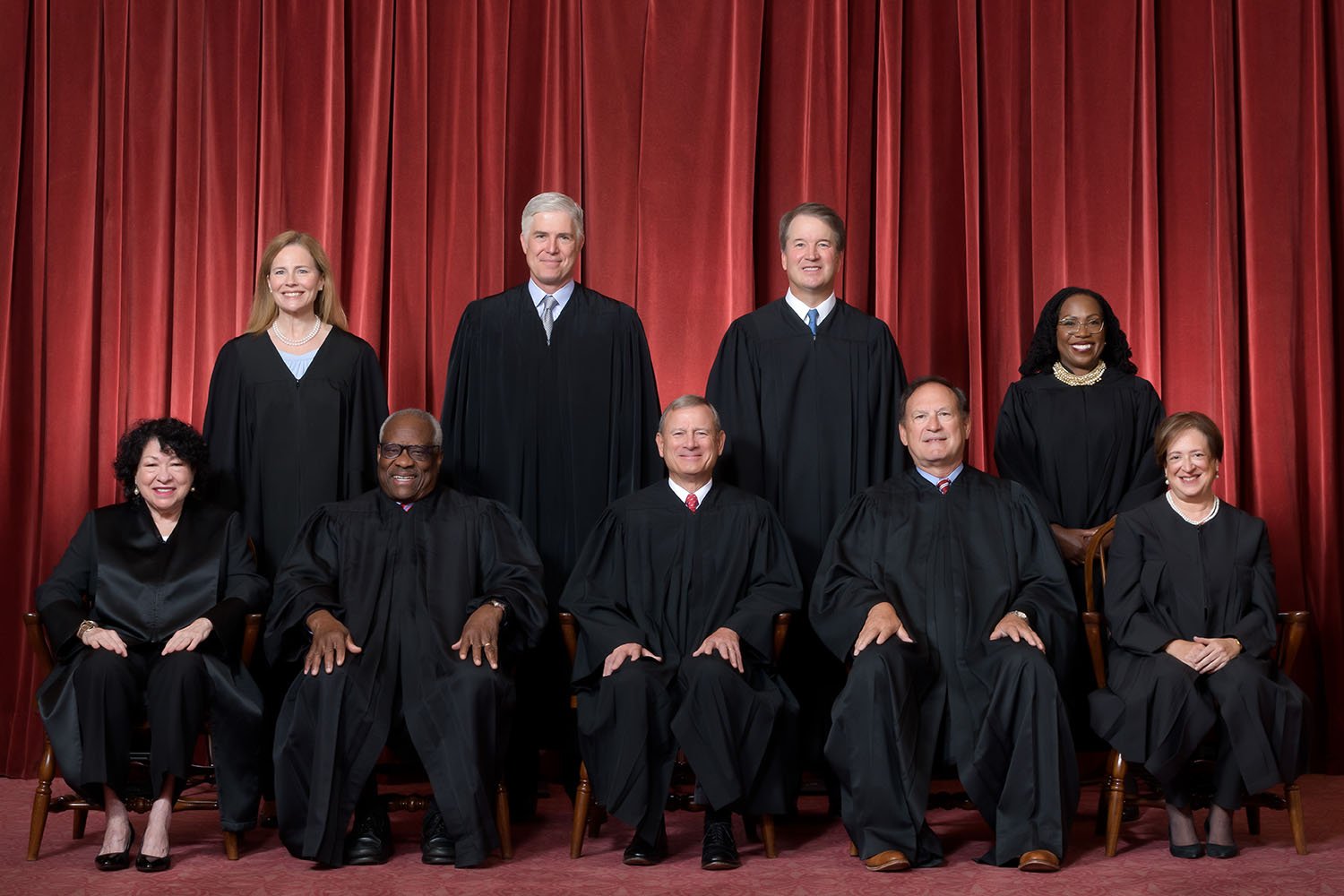
In pleadings and oral arguments, the plaintiffs have repeatedly invoked a 2021 statement by Justice Clarence Thomas, the only member of the Raich court still serving, when he said that the decision was due for reexamination.
“Once comprehensive, the federal government’s current approach is a half-in, half-out regime that simultaneously tolerates and forbids local use of marijuana,” said Justice Thomas, who was in the three-judge minority when Raich was decided.
Counsel for the cannabis interests did not immediately respond to a request for comment Monday. The DOJ did not respond to a request for comment.
The petitioners are represented by David Boies, Joshua I. Schiller, Jonathan D. Schiller, Matthew L. Schwartz, David Barillari, Kelly Waldo and Jack G. Tubio of Boies Schiller Flexner LLP.
Counsel information for the DOJ was not available Monday.
The case is Canna Provisions Inc., et al v. Pamela J. Bondi, et al, case number 25A180, in the U.S. Supreme Court.
Read more at Law 360