
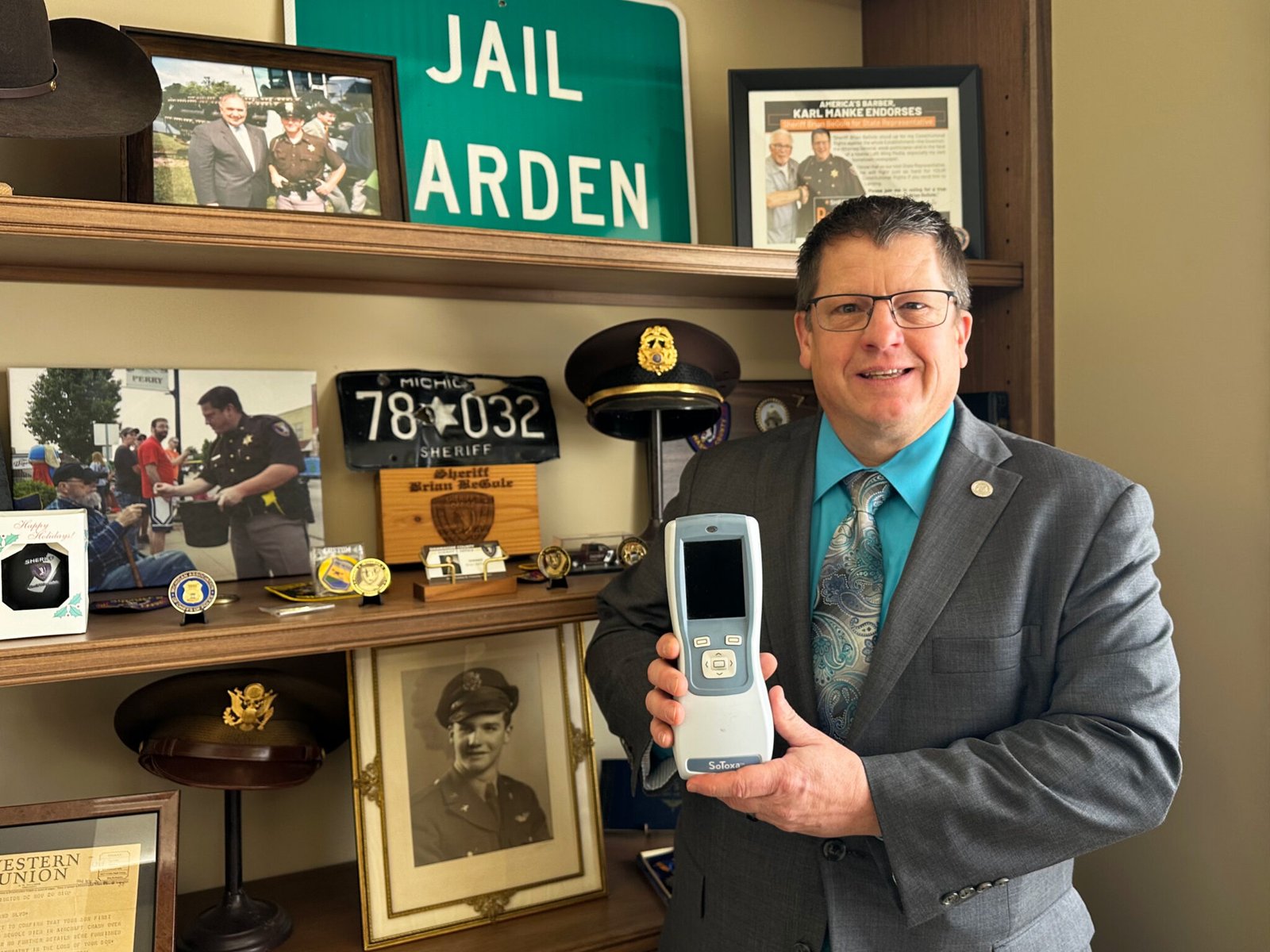
Bills introduced by Reps. Brian BeGole, R-Perry, and Julie Rogers, D-Kalamazoo, are part of a bipartisan effort to improve road safety by targeting drug-impaired driving.
They would allow for a roadside preliminary oral fluid test that officers could use to screen drivers for the presence of controlled substances, similar to the breathalyzer used to detect alcohol.
“This is just a tool to help officers, not necessarily make an arrest, but to make sure they are not arresting someone that shouldn’t be arrested,” BeGole said.
In 2024, of the 1,012 fatal crashes in Michigan, 246 (24.3%) were drug-involved, with at least one drugged operator, bicyclist or pedestrian, according to State Police data.
That year, the number of drug-involved crashes increased by 3%, from 2,250 in 2023 to 2,315 in 2024. Statistics for 2025 are not yet available.
The bills – which face opposition from cannabis advocates – passed the House last year but haven’t moved forward in the Senate Civil Rights, Judiciary and Public Safety Committee.
According to Rogers, the legislation would be part of a multi-step process to help determine whether a driver is under the influence of drugs.
When a police officer sees erratic driving, he or she may pull over and assess the driver’s behavior. If impaired driving is suspected, the officer would first ask to do a field sobriety test, which may include walking a line or counting backwards.
If the driver fails any of these tests, the officer would then be able to administer a first oral fluid test to screen for the presence of six drugs: amphetamine, benzodiazepines, cocaine, methamphetamine, opioids and delta-9-THC, the primary active component of cannabis.
“If the device lights up for the presence of one of those six drugs, then the officer would do a second test, which is more sophisticated,” Rogers said. That second oral fluid test would be sent to a laboratory to determine the amount of a drug in someone’s system.
It would replace a blood test that is currently performed by a nurse or phlebotomist at a medical facility, which Rogers supports amidst a “staffing issue” in health care.
The blood test currently “takes that health care professional off of performing other health care duties, in a time where we can’t afford to take someone out of the emergency room,” she said.
Read more at Capital News Service