
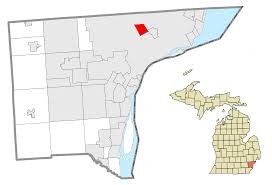
The Michigan Court of Appeals has upheld the City of Highland Park’s ordinance banning marijuana facilities, reinforcing the authority of municipalities to opt out under Michigan’s adult-use cannabis law.
In a unanimous decision, a three-judge panel affirmed summary disposition in favor of Highland Park in a lawsuit brought by AFJN Holdings, LLC, a company seeking to operate an adult-use marijuana facility within the city.
The ruling clarifies how Michigan courts interpret municipal authority under the Michigan Regulation and Taxation of Marihuana Act (MRTMA), the 2018 voter-approved law that legalized recreational marijuana statewide.
AFJN Holdings argued it had the right to operate because it obtained a Certificate of Occupancy before Highland Park enacted its marijuana opt-out ordinance. The company claimed this triggered the “prior non-conforming use” doctrine — a zoning principle allowing certain pre-existing uses to continue after zoning changes.
The Court of Appeals rejected that argument.
The panel ruled the ordinance was regulatory, not a zoning ordinance. Because it regulates a specific activity — marijuana operations — rather than land use categories, the prior non-conforming use doctrine does not apply.
The court concluded that whether the company obtained a Certificate of Occupancy before passage of the ordinance was irrelevant. Highland Park was within its statutory authority to regulate or prohibit marijuana businesses within city limits.
AFJN also argued the ordinance was improperly enacted because it was not properly published in accordance with the City Charter. The company contended that failure to comply with publication requirements automatically allowed it to operate under state law.
The court disagreed again.
Judges held the charter required publication for effectiveness, not enumeration. Because the full text of the ordinance was included in City Council minutes and posted online, the ordinance was properly and timely published under both the charter and Michigan law.
As a result, the ordinance remains valid and AFJN Holdings cannot operate its adult-use marijuana facility in Highland Park.
The decision strengthens municipal control over adult-use cannabis operations across Michigan.
Under MRTMA, cities, villages and townships may:
• Allow marijuana establishments
• Limit the number of licenses
• Prohibit facilities entirely
Dozens of Michigan communities have chosen to opt out of adult-use cannabis, creating a patchwork regulatory landscape for cannabis operators.
The Highland Park ruling signals that courts are willing to uphold properly enacted municipal bans — even when businesses attempt to rely on occupancy permits or procedural technicalities.
The court’s regulatory-versus-zoning analysis could have broader implications for future cannabis litigation in Michigan.
Zoning ordinances govern land use classifications such as residential or industrial districts. Regulatory ordinances, by contrast, govern specific activities.
By classifying the marijuana ban as regulatory, the court reinforced that municipalities may restrict cannabis activity regardless of building occupancy status.
That distinction may limit similar legal challenges from cannabis operators seeking to establish operations in opt-out communities.
Michigan’s adult-use cannabis market generates billions in annual sales and supports thousands of licensed facilities. But legalization did not eliminate local control.
The Court of Appeals decision underscores that municipal authority remains a defining feature of Michigan marijuana law.
For cannabis entrepreneurs and investors, the takeaway is straightforward: state licensing alone does not guarantee operational approval. Municipal authorization remains essential — and legally enforceable.
SOURCE Giarmarco, Mullins & Horton, P.C.