
In a follow-up conversation, Pablo Palomino, Chief Branding Officer at Mint Cannabis, checked back in on a topic we discussed a month earlier: the possible federal rescheduling of marijuana and what it might mean for operators like Mint. Since that first talk, closed-door hearings had been scheduled, with a key date — July 15th — looming as the next real signal of where things are headed. Palomino was candid that this conversation is, in his words, a “middle of the story” moment. Nothing is settled yet, and much of what’s circulating is still hearsay.
Still Operating in Limbo
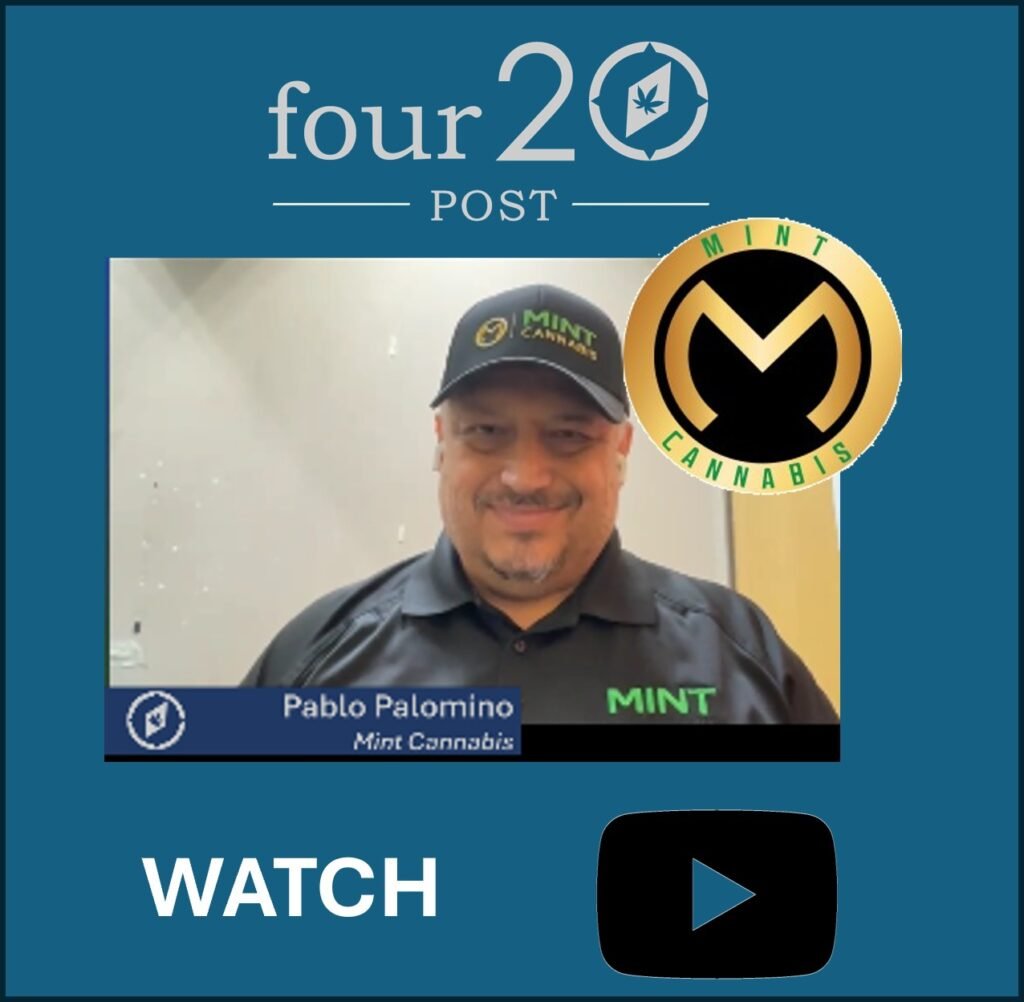
Palomino’s central message was one of measured patience. Until the rules are actually written, he explained, the industry is largely guessing. Mint’s approach in the meantime is to keep compliance standards high across the board, regardless of whether a given store operates in a medical-only or adult-use market. If the drug is reclassified to Schedule III, the biggest practical benefit would be the elimination of Section 280E, the tax code provision that currently prevents cannabis businesses from deducting many standard business expenses. But he was clear that any such change would take time to implement — state regulators would need to rewrite their own rules, and that process doesn’t happen overnight.
Balancing Variety with Reliability
One of the more interesting threads in the conversation was about the tension between recreational customers, who want variety and novelty, and medical patients, who often need consistent, predictable dosing for conditions like chronic pain or PTSD. Mr. Palomino described this as a genuine balancing act for Mint: the company relies on regular meetings between store managers and regional teams to stay close to what customers are asking for, while making sure product quality and compliance never slip. Frontline feedback — what’s selling, what’s missing, what’s working in other markets — feeds directly back into decision-making.
Would Tax Relief Actually Help Consumers?
Palomino was asked directly whether potential tax savings from rescheduling would get passed on to consumers, reinvested into safety and operations, or simply absorbed. His answer was pragmatic: it depends heavily on how far the changes go. A shift limited to the medical market would have a much smaller effect than full “recreational” rescheduling, which he called a genuine game-changer — but he cautioned that this broader shift is still a long way off. Beyond tax relief, he pointed to two other major potential unlocks: access to normal banking services and the ability to borrow money at more affordable rates, both of which are currently constrained by cannabis’s federal status.
The Cost of Operating Outside Normal Business Rules
The conversation also touched on the everyday friction of running a cannabis business under current law — the inability to bank normally, restrictions on hiring staffing companies, and paying penalties other industries simply don’t face. Palomino’s response captured a common sentiment in the space: it’s a tough business, but one built on genuine enthusiasm for the work, even while operating under a different rulebook than nearly every other industry.
Big Pharma, Big Tobacco, and the Question of Consolidation
Asked whether easier federal rules might open the door for large pharmaceutical or tobacco companies to acquire smaller, mission-driven operators, Palomino didn’t dodge the question. He acknowledged it’s likely inevitable — companies with deep pockets eventually move into profitable markets. But he framed Mint’s outlook as focused on what it can control: growing, helping people, and enjoying the work, rather than worrying about a future consolidation it can’t prevent.
Insurance Coverage Is Coming — Eventually
On whether health insurers might eventually cover medical cannabis the way they cover other treatments, he was optimistic but noncommittal on timing. He believes reclassification would open the door to more research and, eventually, insurance coverage, since cannabis provides real medical benefit to many patients. But he was honest that nobody currently has a solid answer for when that might happen.
About Mint Cannabis
Mint Cannabis got its start nine years ago in Guadalupe, Arizona, before expanding to a second, tiny thousand-square-foot store in Mesa. Still privately owned, the company has since grown into a multi-state operator with locations in Michigan, Illinois, Missouri, Nevada, Arizona, and Florida, with more markets in the pipeline. Mr. Palomino credits much of that growth to the founding team’s retail and marketing background — a combination he sees as a differentiator in an industry often built by people without that commercial lens.
On company culture, he pointed to internal promotion as evidence of a healthy workplace: many of Mint’s regional general managers started as budtenders or receptionists and worked their way up. He acknowledged the company isn’t perfect — not everyone loves working there — but noted that employees who leave often try to come back within six months.
The Bigger Picture
Throughout the conversation, a consistent theme emerged: the cannabis industry is moving fast, but federal policy is moving slowly and cautiously. Whatever happens after July 15th, meaningful change — in taxes, banking, insurance, or market structure — is likely to arrive gradually, through a long process of rulemaking rather than a single dramatic shift. For operators like Mint, the strategy in the meantime is to keep compliance strong, stay close to customers, and stay flexible for whatever comes next.