
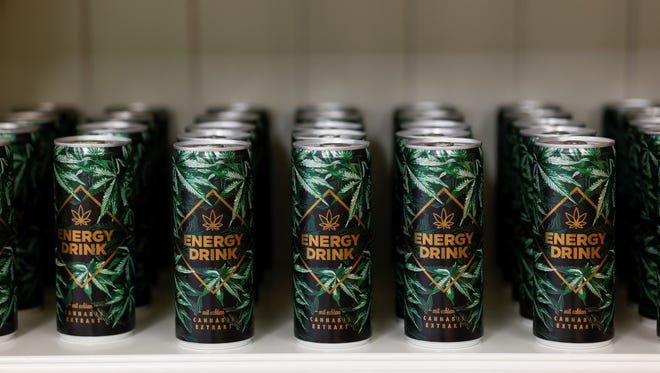
Michigan’s legal weed industry and the state’s beer and wine distributors both want THC beverages on store shelves and in bars and restaurants.
The Michigan Beer & Wine Wholesalers Association, a powerful lobby in Lansing, is trying to woo lawmakers with a plug-and-play system that gives distributors wholesale access to the cannabis drink market, connecting cannabis processors with 20,000 liquor stores and bars across the state.
Currently, THC beverages are only available at licensed marijuana dispensaries throughout the state.
The beer and wine industry hopes cannabis can plug leaky demand — the percentage of U.S. adults who say they consume alcohol fell to an all-time low this year to just 54%, according to a Gallup poll that’s tracked alcohol consumption since 1939.
But the Michigan Cannabis Industry Association stands in the way of those ambitions, instead urging lawmakers to follow the THC beverage framework in Minnesota, where the entire program is controlled by the weed industry and its regulators.
“Cannabis is not alcohol and it never will be,” said Robin Schneider, executive director of the MICIA, to Crain’s. “Placing cannabis beverages into the three-tier system and into Michigan’s liquor law sets a dangerous precedent for our industry, opening the door for more THC products to be taken away … Our members have invested hundreds of millions of dollars into our regulated cannabis program and do not deserve to have their investments ripped out from underneath them.”
Bottoms up, spirits down
THC beverages, often waters, teas, sodas or seltzers containing 2 milligrams to 100 milligrams of the psychoactive compound found in marijuana, represent only a tiny fraction of the state’s more than $3 billion legal marijuana market.
Through October, the industry has sold $16.6 million worth of THC beverages in Michigan this year, according to data from market analysis firm Headset.io, representing just 0.6% of the total sales of $2.6 billion over the same 10 months.
But THC beverages are the fastest-growing sector in the stagnating industry, accounting for a 30.3% year-over-year growth rate in October.
Nationally, it’s one of the hottest consumer markets as well, fueled by a federal legal loophole that allowed for many of these drinks to be distributed nationally, even into states without a legal cannabis framework. Currently, 39 states allow or don’t ban THC beverages.
For beer and wine distributors, that kind of growth means opportunity.
Read more at Crain’s Detroit Business