
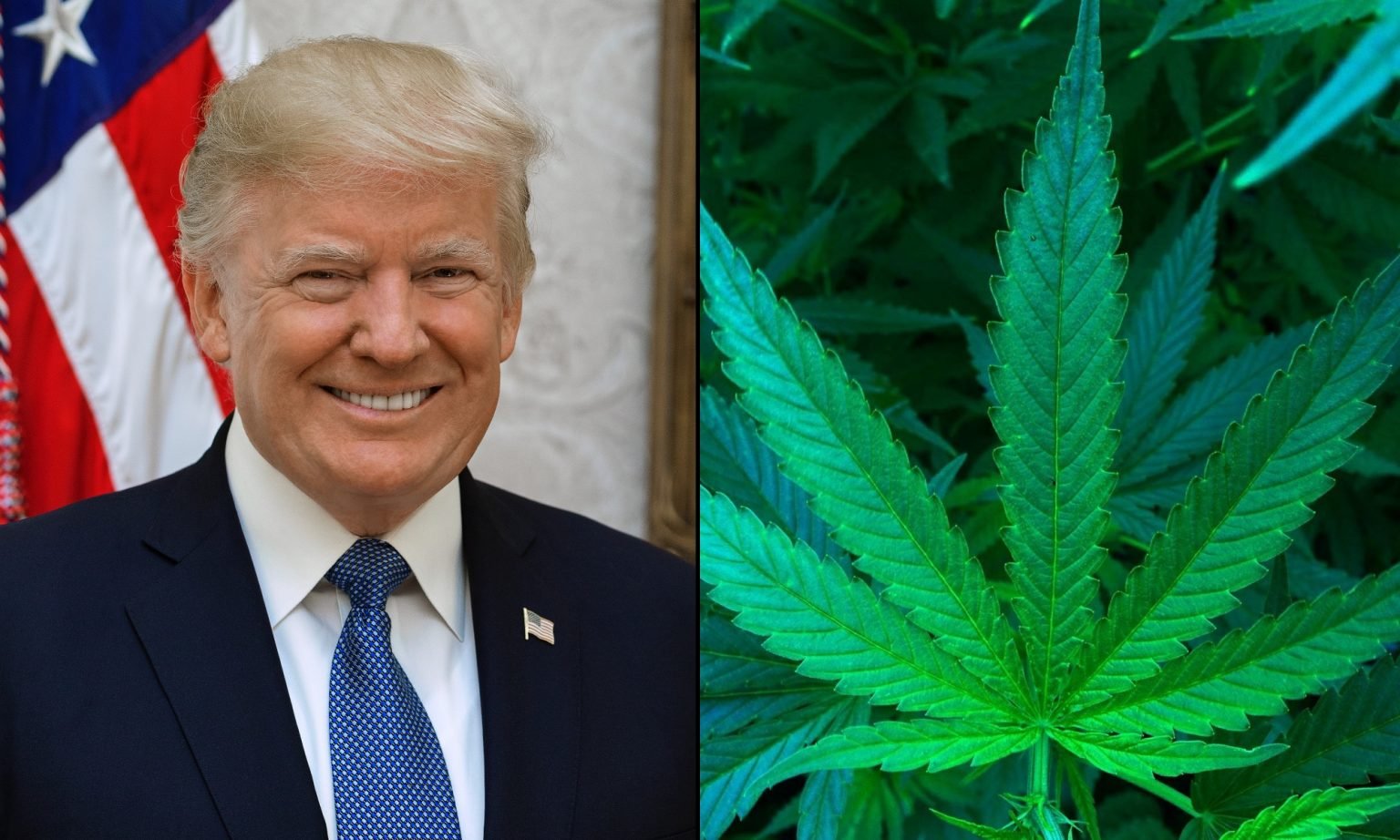
President Trump is likely to loosen long-standing federal restrictions on marijuana early next year by reclassifying the drug under federal law, according to Axios. If that happens, the move would carry major consequences for cannabis companies, investors, researchers, and state-regulated marijuana markets.
Under the plan under review, marijuana would be shifted from Schedule I — a category reserved for drugs like heroin that are deemed to have no accepted medical use — to Schedule III, a classification that recognizes medical value and lower abuse potential. While the change would stop short of fully legalizing marijuana at the federal level, it would significantly reshape the cannabis industry’s financial and regulatory landscape.
Why the Change Matters
Reclassifying marijuana would ease federal restrictions, expand medical research, and — most importantly for cannabis operators — eliminate a major tax penalty that has long plagued the industry.
Cannabis companies are currently subject to IRS Code 280E, which prevents businesses that traffic in Schedule I substances from deducting normal operating expenses such as payroll, rent, marketing, and utilities. As a result, many cannabis companies face effective tax rates as high as 60% to 80%.
If marijuana is moved to Schedule III, 280E would no longer apply, allowing cannabis companies to deduct ordinary business expenses like any other legal industry. For many operators, that change alone could turn unprofitable businesses into profitable ones almost overnight.
Impact on Cannabis Companies
A Schedule III designation would likely:
- Dramatically lower tax burdens for licensed cannabis companies
- Improve cash flow and balance sheets across the industry
- Increase investor confidence and access to capital
- Accelerate mergers and acquisitions, favoring larger, compliant operators
- Improve credibility with landlords, insurers, universities, and research institutions
Publicly traded multi-state operators (MSOs) would be among the biggest beneficiaries, as many have struggled under the weight of 280E despite strong sales growth in legal states.
What It Would Not Do
Despite frequent misconceptions, reclassification would not make marijuana federally legal for recreational use. It would not automatically open interstate commerce, nor would it eliminate the patchwork of state-by-state cannabis laws.
Cannabis would remain a controlled substance, still subject to federal oversight, and most large banks would likely continue to proceed cautiously without additional legislation such as the SAFE Banking Act.
Why Trump Is Considering the Move
According to Axios and earlier reporting by The Washington Post and The Wall Street Journal, Trump’s team has been reviewing polling data showing growing public support for marijuana reform. A recent Gallup poll found that 64% of Americans now support legalization, up from 36% in 2005.
Trump has also shown openness to cannabis-related issues in recent months. In September, he posted a video on Truth Social advocating for Medicare coverage of hemp-derived CBD. In August, he confirmed he was considering rescheduling marijuana as a Schedule III drug.
Behind the scenes, cannabis companies and advocacy groups have been actively courting Trump. The pro-cannabis American Rights and Reform PAC has donated $1 million to a Trump-aligned super PAC, and several cannabis companies contributed to Trump’s inaugural fund.
Political Implications
Some Democrats and progressive groups worry that Trump could neutralize a traditionally liberal issue by advancing marijuana reform himself. The Progressive Turnout Project recently warned that Trump was attempting to “steal marijuana reform right out from under us.”
A White House official cautioned this week that no final decision has been made.
The Bottom Line
If marijuana is reclassified from Schedule I to Schedule III, the change would mark the most significant federal shift in cannabis policy in decades — not by legalizing marijuana outright, but by fundamentally improving the economics of the legal cannabis industry.
For cannabis companies, it would mean lower taxes, stronger balance sheets, and renewed investor interest. For policymakers, it would increase pressure to address unresolved issues such as banking access and interstate commerce. And for voters, it would signal how quickly marijuana reform has moved from political fringe to mainstream policy.
Michigan and Ohio Impact
Michigan: Profitability and Consolidation Pressure
Michigan’s mature adult-use cannabis market would be among the biggest beneficiaries of a federal move to Schedule III.
Licensed Michigan operators have been hit hard by price compression, oversupply, and 280E taxes, forcing layoffs, store closures, and consolidation. Eliminating 280E would immediately improve margins for dispensaries, processors, and growers across the state, particularly for companies with large payrolls and real estate footprints.
The change would likely:
- Push more Michigan operators into profitability
- Speed up consolidation as stronger players acquire distressed assets
- Improve access to capital for expansion, technology upgrades, and compliance
- Strengthen the position of vertically integrated operators
Michigan’s long-established regulatory framework also puts its cannabis companies in a strong position to handle any additional federal compliance that comes with Schedule III oversight.
Ohio: A Boost to a Market in Transition
Ohio’s adult-use marijuana market is still in its early stages, with lawmakers continuing to revise and restrict parts of the voter-approved legalization law.
For Ohio operators, rescheduling marijuana would:
- Lower tax burdens at a critical growth stage
- Encourage new investment as the recreational market ramps up
- Improve financial viability for dispensaries and cultivators facing regulatory uncertainty
- Increase pressure on state lawmakers to align policy with federal signals
The change could also blunt the economic impact of recent Ohio legislation aimed at discouraging residents from purchasing marijuana in neighboring states, including Michigan. Lower federal barriers and stronger in-state operators could help Ohio retain more cannabis spending within its borders.
Cross-Border Effects
Michigan has long benefited from cross-border cannabis tourism, especially from Ohio residents. While federal rescheduling would not legalize interstate cannabis commerce, it could intensify political and economic pressure on Ohio to fully stabilize and expand its adult-use market to compete with Michigan.
In both states, Schedule III reclassification would shift cannabis from a survival-mode industry to one focused on profitability, scale, and long-term growth.
What Lawmakers and Cannabis Operators Are Saying
Michigan
Michigan cannabis operators say a move to Schedule III would finally give the state’s legal industry a fair shot after years of operating under punitive federal tax rules.
“Michigan businesses have played by the rules, invested heavily in compliance, and still been taxed into the ground,” said a Michigan-based cannabis operator. “Eliminating 280E would allow us to reinvest in workers, technology, and safety instead of sending most of our revenue to the IRS.”
State policymakers say federal rescheduling would reinforce Michigan’s early decision to legalize and regulate cannabis.
“Michigan built a responsible adult-use framework years ago,” a state lawmaker said. “If the federal government acknowledges marijuana’s medical value, it strengthens the case for treating licensed cannabis businesses like any other legitimate industry.”
Ohio
In Ohio, where adult-use legalization is newer and still evolving, operators say federal rescheduling could provide stability amid shifting state rules.
“We’re trying to build a new market while the rules keep changing,” said an Ohio dispensary owner. “Schedule III wouldn’t fix everything, but it would remove a massive financial barrier at a critical moment.”
Ohio lawmakers watching the federal debate say rescheduling could increase pressure to align state policy with voter intent.
“When voters approved legalization, they expected a functioning marketplace,” an Ohio legislator said. “If Washington moves to Schedule III, it raises serious questions about why Ohio would continue treating cannabis as a high-risk industry.”
Industry-Wide Perspective
National cannabis advocates say rescheduling would mark a turning point, even without full federal legalization.
“This would be the most consequential federal cannabis reform in decades,” said an industry policy analyst. “It shifts the conversation from whether cannabis should exist to how it should be regulated and taxed.”
Political Angle
Some observers see the issue as increasingly bipartisan.
“This is no longer a left-right issue,” said a political strategist familiar with cannabis policy. “It’s about economics, public opinion, and whether the federal government wants to keep penalizing a state-legal industry.”
1. End of 280E = Massive Financial Relief
This is the single biggest impact.
Today, because cannabis is Schedule I, companies are subject to IRS Code 280E, which blocks them from deducting normal business expenses.
If moved to Schedule III:
- 280E would no longer apply
- Cannabis companies could deduct:
- Payroll
- Rent
- Marketing
- Utilities
- Insurance
- Professional services
Result:
👉 Effective tax rates could drop from 60–80% down to normal corporate levels
👉 Many companies would flip from losses to profitability almost overnight
2. Improved Access to Capital (But Not Full Banking)
Schedule III does not legalize cannabis federally, but it reduces risk.
What improves:
- More institutional investors become willing to invest
- Better terms on private debt
- Increased M&A activity
- Lower cost of capital
What does NOT automatically change:
- Cannabis is still federally illegal
- Most large banks will still be cautious
- SAFE Banking still matters
👉 Think incremental improvement, not full normalization.
3. Major Boost to Public Cannabis Stocks
Public MSOs (multi-state operators) benefit immediately:
- Improved earnings once 280E is gone
- Stronger balance sheets
- Higher valuations justified by fundamentals
- Renewed institutional interest
Likely winners:
- Large MSOs with scale and tax exposure
- Companies with heavy payroll + real estate costs
- Operators close to breakeven today
This is why markets react so strongly to rescheduling headlines.
4. More Credibility With Regulators, Partners, and Media
Schedule I = “no medical value.”
Schedule III = recognized medical use.
That matters.
Impacts:
- Easier partnerships with:
- Universities
- Healthcare-adjacent companies
- Pharma and biotech
- Less stigma with landlords, insurers, vendors
- Stronger footing in court challenges and policy fights
5. Expanded Medical Research (Long-Term Upside)
Rescheduling dramatically loosens research restrictions.
Over time this enables:
- Clinical trials
- FDA-approved cannabis-derived medicines
- IP development
- Pharma partnerships
This doesn’t help every dispensary—but it expands the total addressable market for cannabis as medicine.
6. Compliance Burden Increases (Quiet Downside)
Schedule III drugs are still controlled substances.
That means:
- DEA oversight remains
- Tighter tracking and recordkeeping
- More scrutiny for manufacturers
- Potential FDA involvement for certain products
Large, professional operators can handle this.
Smaller or gray-market players may struggle.
7. What It Does Not Do
Important to be precise:
❌ Does NOT legalize recreational cannabis federally
❌ Does NOT eliminate state-by-state systems
❌ Does NOT automatically open NYSE/Nasdaq listings
❌ Does NOT solve interstate commerce
It’s a business fix, not a legalization bill.
Bottom Line
Schedule III would:
- Dramatically improve cannabis company finances
- Accelerate consolidation
- Reward scale and compliance
- Attract serious capital back into the sector
For operators: survival → profitability
For investors: speculation → fundamentals
For policymakers: pressure increases for next steps (SAFE Banking, descheduling)