
Michigan’s legal cannabis market closed 2025 with a modest decline, marking a clear shift from years of explosive growth to a more mature, price-competitive phase—just as a significant new tax takes effect in 2026.
Total cannabis sales in Michigan declined 3.5% in 2025, finishing the year at an estimated $3.17 billion, down from $3.29 billion in 2024, according to data tracked by the Michigan Cannabis Regulatory Agency and industry analysts. While the year-over-year decline may appear concerning on the surface, industry observers say the numbers reflect falling prices and oversupply, not weakening consumer demand.
December Sales Provide a Steady Finish to 2025
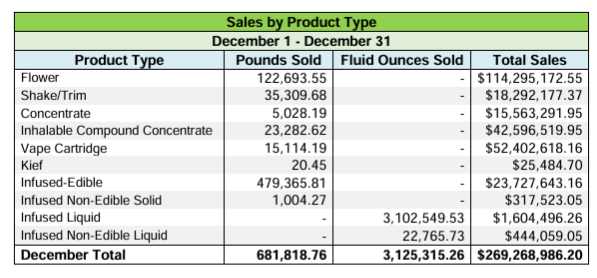
Michigan’s cannabis market ended 2025 on relatively firm footing. December sales totaled roughly $270 million, a modest increase from November and slightly higher than December 2024. Adult-use marijuana continued to dominate the market, while medical cannabis accounted for only a small fraction of total sales.
The December performance highlights a key dynamic shaping Michigan’s cannabis economy: strong participation but shrinking revenue per unit. Consumers are buying, but they are paying less as competition intensifies and wholesale prices remain depressed.
A Decade-Defining Shift: From Hypergrowth to Market Maturity
Michigan’s cannabis trajectory over the past five years illustrates how quickly the industry has evolved:
- 2021: Sales surged 82.1% to $1.79 billion
- 2022: Growth slowed to 27.9%, reaching $2.29 billion
- 2023: Sales climbed 33.3% to $3.06 billion
- 2024: Growth cooled to 7.6%, totaling $3.29 billion
- 2025: Sales declined 3.5% to about $3.17 billion
The slowdown reflects a market that has largely completed its rapid expansion phase. Retail density has increased significantly, product availability is abundant, and Michigan now boasts some of the lowest cannabis prices in the country. For consumers, that has been a win. For operators, it has compressed margins and intensified competition.
Price Compression, Not Demand Collapse, Drives the Decline
Industry participants consistently point to price deflation as the primary factor behind 2025’s decline. Wholesale flower prices remain under pressure due to oversupply, and retailers have relied heavily on discounts to maintain foot traffic.
This dynamic has kept unit sales relatively strong while pulling down total dollar sales. In effect, Michigan’s cannabis market is behaving like a mature consumer goods sector, where volume growth no longer guarantees revenue growth.
New 24% Wholesale Tax Changes the 2026 Equation
Looking ahead, the most consequential factor shaping 2026 will be Michigan’s new 24% cannabis wholesale tax, which took effect January 1. The tax is applied at the wholesale level on adult-use cannabis before products reach retailers, adding a significant cost layer to the supply chain.
The impact of the tax will depend on how much of it is passed through to consumers versus absorbed by cultivators, processors, and retailers—particularly vertically integrated operators.
Key questions for 2026 include:
Can operators absorb part of the tax to protect market share?
Will retail prices rise meaningfully after years of decline?
Will higher prices push consumers toward the illicit market?
Written by Editor Mike Brennan